We're glad you dropped in.
Take a look at all of the great information we've gathered!

Our Family's
Surname Chart

Our database has over 8,000 names.

Stirnimann Association Newsletters

Have something to add?
Please send it to us!
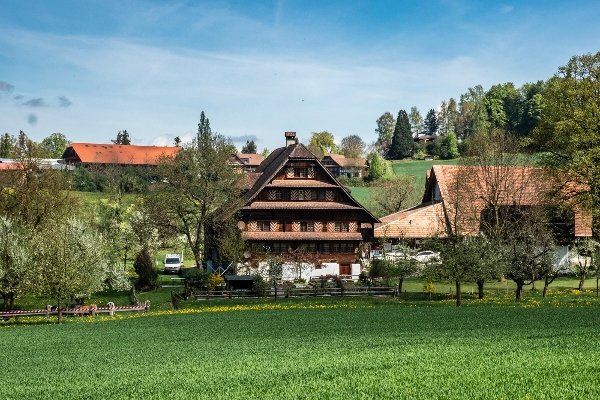
 he "Unter-Rot" house near Ruswil, Switzerland. Built in 1705 by Loenz Stirnimann and renovated in 1988. This farm was home to six generations of our ancestors. This house is listed on Switzerland's National Historical Register.
"On the north side of the Ruswil Mountains, approx. four kilometers northwest of the village of Ruswil and approx. two kilometers southeast of the village Buttisholz, the rural group of farms 'In the Rot' is in a scenic, delightful, protected and a fruitful valley, flanked on the south and west by the red dog ditch forest. The farm 'Unter Rot' with the powerful house and the old cheese factory is the core area of the farm 'In the Rot', which was fief-property of the monastery Muri. When and on what conditions the fief-farmers received the full vested titles, is not known. It was one of the large and wealthy farms with influential families from the period of the mid 15th up to the mid 18th centuries in central Switzerland.
"The farm name comes from a near by brook, 'the Rot (Red)', which is in the area of the upper Säliwalds on the Ruswil mountains. The 'Geißbach (Goat-brook)' and 'Eselbach (Donkey brook)' springs rise and join to form the Rot. The two brooks flow north and south respectively by the real estate 'Unter Rot' and unite below in the red forest that is adjacent to the 'Rot'. The Luzern red valley also received its name from this red brook, which flows below Ettiswil into the Wigger. The correct form of the farm name is different in various sources: in the Roth, us of the Roth, Rot, Root, Rodt and Rott. "The origin of the name has different interpretations. One says, it is of Celtic origin and would mean "the run", others explain the name with red water, which can flow in the brook." (From the book "Denkmalpflege im Kanton Luzern" 1988 by Claus Niederberger,)
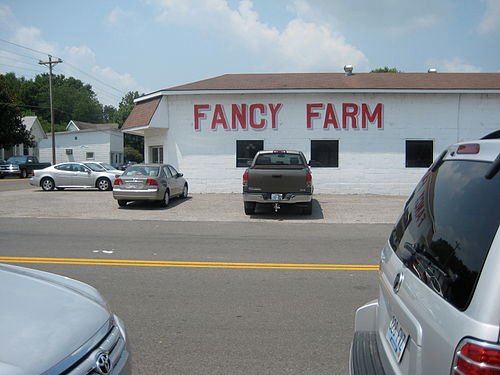
 n 1818 General Andrew Jackson and Isaac Shelby bought the west end of the present state of Kentucky from the Chicksaw Indians. News of the new and unmolested territory soon spread throughout the commonwealth. "Having heard of the new rich territory, 'The Purchase', the newlyweds, Sam and Elizabeth Hobbs Willett, decided to stake their chances in the west. In the spring of 1829 they made their toilsome journey across the state on horseback and came to Graves County. Young Sam bought a half township of land, from the government, at the rate of twelve and one-half cents an acre. His domain embraced all the present site of Fancy Farm." (Taken from A Sesquicentennial History of Kentucky).
Soon Sam and Elizabeth's siblings joined them in Graves County and developed the town of Fancy Farm. Even today the prevailing surnames in Fancy Farm is Willett and Hobbs.
"Fancy Farm is an unincorporated community and census-designated place in Graves County, Kentucky, United States, 10 miles (16 km) northwest of the county seat, Mayfield. As of the 2020 census it had a population of 403. Fancy Farm is on Kentucky Route 80 in the rural, far-western portion of the state. It was settled by Roman Catholics (Gillette's and Hobbs) starting in 1829, and is known for being a strongly Catholic area. The community grew around St. Jerome Church, built in 1836. The first post office opened in 1843. The colorful name was apparently chosen when the post office opened, by a man who was applying to be postmaster. It was first mentioned in the U.S. Census in 1870 as a post office in Boswell Precinct; first mentioned as a town in Magisterial District 5 in the 1910 census; and finally enumerated as a town in its own precinct in the 1920 census." (Wiki)
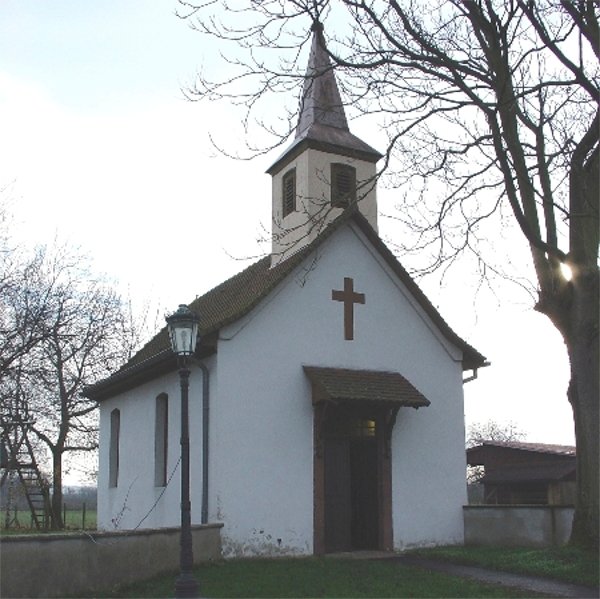
This Chapel is on the grounds of Les Bains d'Artolsheim, Alsace, France, which is today a bed and breakfast establishment run by Maurice Waltsberger. This is the ancestral home of the Schmitt/Waltsberger family. The grounds consist of the "old" family home which has been renovated by Maurice into the B&B, The chapel was once visited by Pope Urban, who left a relic that is still held in the church. Also on the grounds is the original Celtic mineral spring well.
The mineral spring well was a gathering place for the Celtics before the Romans invaded the area. Then, it was enlarged to become a well known Roman Bath house during their occupation. The bath house remained functional for many centuries creating the interest and visit from the Pope. Inside the chapel, one on each side of the door, are statues with the names of our ancestors engraved below, Ignatius Waltspurger and Marie Ursula Klein. (Walt Sterneman II)
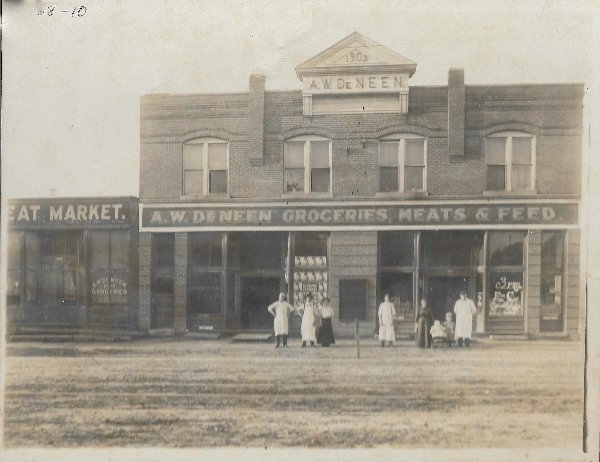
This is the grocery owned and operated by A. W. Deneen. We believe this was taken in 1910 (the number at the top may be date taken).
Hans CäsarStirnimann was born in Daro, Canton Tincino, a mountain area of southern Switzerland bordering Italy. His father, Jakob, owned a European wine franchise and spoke 11 languages. Until age 12 or 13 Hans traveled extensively with his father and spoke 5 languages. Jakob died in 1902. Hans disliked being overseen by his brother (Oscar), older by three years. His mother sent him to be tutored by uncles at a Catholic Benedictan monastery in Einseidetn, Zurich, Switzerland. Claiming the uncles hammered on him, he left the monastery after a few years to attend the University of Zurich - dates unknown - and apprenticed in landscaping with another uncle in or near Zurich.
After a falling out he became a government postmaster in the Basel area where he met Adèle Loew. Their son Hans Edward, was born shortly after their marriage, in Bolligen a few kilometers from Bern. The couple resided briefly in Ostermundigen, also in Canton Bern. Apparently because of religious differences between the families, they decided to emigrate to the U. S. Hans' mother had given him a list of American relatives his father had previously financed, the purpose to collect these debts and establish a residence.
The couple's residence is uncertain for the next two years. Hearsay places them in south Wisconsin, or the Chicago area. The second child, Margaret born April 28, 1913, has never located her birth certificate. By May 1914 the family had moved to Springfield, MO. where Hans worked for the Missouri Rangers. With 6 children, the family moved to Evansville, IN in 1924. John (Hans C.), worked in Evansville for Thornborgh Nursery. During the depression he worked for the WPA, landscaping Mesker's Park and Zoo and Burdette Park in Evansville. Later John worked for Crescent Nursery, buying interest in it and eventually owning his own business, Sterneman's Nursery, which opened on Weinbach Ave. and was later moved to Greenriver Rd. in Evansville. (Adele Sterneman Moore)
John Sterneman changed the spelling of the last name from Stirnimann when he emigrated in 1912.
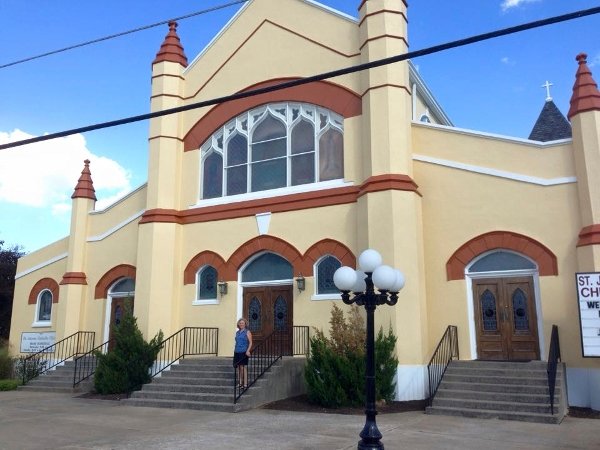
The annual St. Jerome Catholic Church Picnic, famous as a traditional political gathering attracts statewide and occasionally national candidates. The picnic, referred to as the "Fancy Farm Picnic," began in 1881 as a purely local affair and takes place on the grounds of the church. Since 1956 it has been held on the first Saturday in August and has come to represent the traditional starting point of the fall campaign season in Kentucky.
The picnic was of largely local interest until two-time Governor A. B. "Happy" Chandler (best known as the second Commissioner of Major League Baseball) began making appearances, going for the first time in 1931 while running for lieutenant governor.
National figures who have made speeches include George Wallace in 1975, Lloyd Bentsen in 1988 and Al Gore in 1992. Vice President Alben Barkley, who was born at nearby Wheel and lived in Paducah, spoke many times over the years.
In addition to the political appearances, the picnic offers traditional fair activities such as bingo games and raffle prizes. Food includes barbecue, a Knights of Columbus fish fry on Friday evening and homemade baked goods. The event was recognized in the 1985 Guinness Book of World Records as the "World's Largest Picnic" for the consumption of 15,000 pounds of mutton, pork, and chicken at the 1982 picnic. (Wiki)
Walt's Grandparents
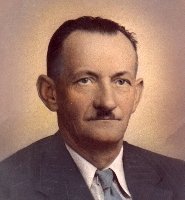
Hans Cäsar Stirnimann
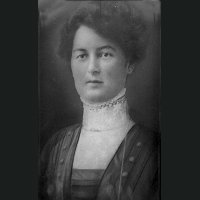
Adèle Loew
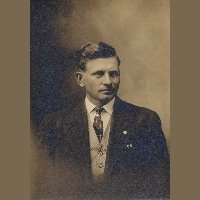
Phillip Muehlbauer
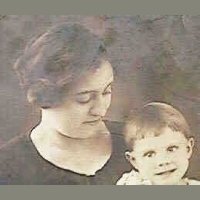
Olevia Schmitt
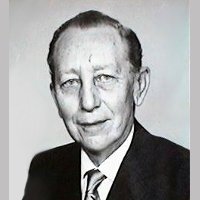
Joseph Malcolm Willett
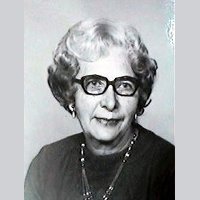
Geneva Stover
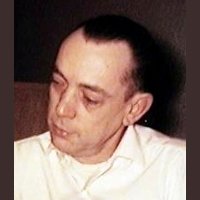
Frank DeNeen
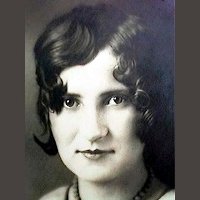
Mary McLaughlin
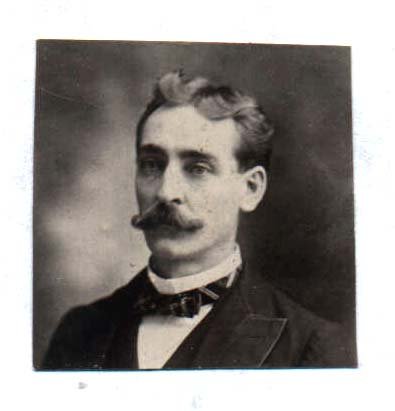
he bones here are bones of my bone and flesh of my flesh. It goes to doing something about it. It goes to pride in what our ancestors were able to accomplish. How they contributed to what we are today. It goes to respecting their hardships and losses, their never giving in or giving up, their resoluteness to go on and build a life for their family. It goes to deep pride that the fathers fought and some died to make and keep us a nation. It goes to a deep and immense understanding that they were doing it for us.
It is of equal pride and love that our mothers struggled to give us birth, without them we could not exist, and so we love each one, as far back as we can reach. That we might be born who we are. That we might remember them. So we do. With love and caring and scribing each fact of their existence, because we are they and they are the sum of who we are. So, as a scribe called, I tell the story of my family. It is up to that one called in the next generation to answer the call and take my place in the long line of family storytellers. That is why I do my family genealogy, and that is what calls those young and old to step up and restore the memory or greet those who we had never known before.
by Della M. Cummings Wright; Rewritten by her granddaughter Dell Jo Ann McGinnis Johnson; Edited and Reworded by Tom Dunn, 1943.
 Why waste your money looking up your family tree? Just go into politics and your opponents will do it for you.
 Everyone has ancestors and it is only a question of going back far enough to find a good one.
 We've uncovered some embarrassing ancestors in the not-too-distant past. Some horse thieves, and some people killed on Saturday nights. One of my relatives, unfortunately, was even in the newspaper business.
 Southerners are so devoted to genealogy that we see a family tree under every bush.
 My grandmother started walking five miles a day when she was sixty. She's ninety-seven now, and we don't know where the hell she is.
 You can use this area to place information about family or places. Just add them in!
If you do not see your surname, please use our search engine.
We make every effort to document our research. If you have something you would like to add, please contact us.